Worm Composting Bins: The $10 Tote Beats the $130 System (Reddit Agrees)
This guide contains affiliate links. If you buy something through them, we earn a small commission at no extra cost to you — it’s how we keep the research going.
GardenVerdict earns a commission on purchases made through links in this article, at no extra cost to you.
Every worm composting buyer’s guide online shows you the same thing: a tidy tower system with a spigot at the bottom, trays that stack like a hotel for worms, and promises of hands-free harvest. It’s attractive. It’s convincing. And according to nearly everyone who’s actually used one past the first harvest, it’s mostly marketing.
Across five threads on r/Vermiculture and r/composting — spanning beginners, hobbyists, and people running operations that sell hundreds of dollars in castings annually — the message is strikingly uniform: spend your money on worms, not the bin.
That doesn’t mean all bins are equal. But it does mean the decision tree looks very different than the product pages suggest.
What the Research Actually Shows
The biggest myth in vermicomposting gear is that “vertical migration” — the process where worms in tower systems supposedly migrate upward through fresh trays, leaving behind harvestable, worm-free castings below — works reliably in practice.
It doesn’t.
As u/Just_Trish_92 on r/Vermiculture put it (4 upvotes): “Every review I’ve seen that was made after the reviewer had gotten to the point of harvesting castings has said that [vertical migration] doesn’t really work.” She owns a Worm Factory 360 alongside a basic Sterilite tote, and prefers the horizontal side-to-side harvest method in the tote: more predictable, no worm sorting required.
The second myth is the “worm tea” spigot. YouTuber Harry (“Worm Guy”), who reviewed these bins after years of personal use, is blunt: “The liquid that comes out of this bottom spigot is actually the result of overfeeding your worms. It’s a nasty byproduct… if you’re doing things correctly, you really shouldn’t have that anyways.” The spigot is not a feature — it’s a sign you’re making a mistake.
None of this means commercial systems are useless. But it does change how you should weigh your options.
Two Questions Before You Buy
1. How much kitchen waste do you generate? A single-person household or light-waste family can thrive indefinitely with a 10-gallon Rubbermaid tote and 500–1,000 worms. If you’re regularly filling a 5-gallon kitchen bucket, you need more surface area — multiple totes or an Urban Worm Bag.
2. What’s your available space? Tower systems (WF360, VermiHut) have a small floor footprint — they can fit under a sink. Totes and the Urban Worm Bag need more horizontal room. If you’re working with a studio apartment counter or a single closet shelf, the tower systems’ form factor is a genuine advantage.
If you answered “light waste” and “limited space,” the tower systems are a reasonable trade-off despite the price. Everyone else: read the tote section first.
The Bins, Ranked by What Reddit and YouTube Actually Think
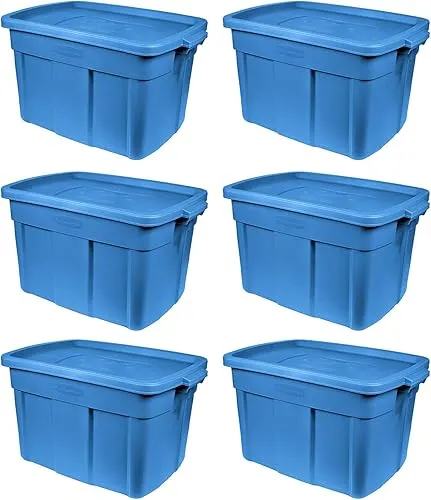
1. HDX 14-Gal Tote or Rubbermaid Roughneck 10-Gal — The Real Best Buy

$10–$25 · Buy on Amazon
The recommendation you’ll see in every r/Vermiculture thread for beginners — and for a lot of experienced composters — is some variation of: go buy the black-and-yellow bin from Home Depot and drill some holes in the lid.
That’s it. That’s the advice.
u/alpaca-miles, who appears in multiple threads (9 upvotes in one, 5 in another): “I just got a $10 black and yellow tub from Home Depot and drilled some holes in the lid. Working well for me.”
Noel Davis of World Composting, who reviewed seven different bin types in a YouTube comparison, singles out the Rubbermaid Roughneck specifically: “These things I’ve had for 10–11 years and they’ve held up amazingly.” He recommends drilling holes in the sides rather than the lid — it maintains moisture better while still allowing airflow. The 14-gallon is his recommended upper limit for anything you’ll need to move; he abandoned a 27-gallon tote after it became impossible to lift.
The side-to-side harvest method — feeding on one end, harvesting from the other as worms migrate toward fresh food — is simpler and more reliable than the tower system vertical migration. You don’t end up with a full tray of worms that refuse to leave.
Pros
- Cheapest option by far — $10–$15 at Home Depot, Walmart, or Costco
- Rubbermaid Roughneck is documented as lasting 10+ years
- 14-gal is large enough for a solid worm population, still moveable (~50 lbs full)
- Side-to-side harvest is more reliable than tower systems’ vertical migration
- Easy to scale: just add another tote
Cons
- Requires drilling (holes in sides or lid, second tote underneath for drainage)
- No leachate collection without a second tote setup
- Black interior makes it harder to see what’s happening inside
- 27+ gallon versions are immovable when half-full — don’t go bigger
2. Urban Worm Bag — The One Commercial Product That Earns It
$115–$140 · Buy on Amazon
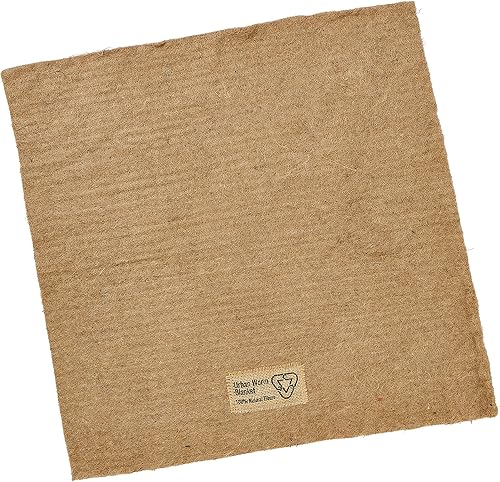
If you’re processing serious volumes of kitchen waste and want a near-commercial output without a commercial footprint, the Urban Worm Bag has earned its reputation. This is the one product where the commercial marketing and actual user experience align.
Harry (“Worm Guy”): “One summer alone, they sold over $500 in worm castings. It is basically a residential version of a commercial worm farm.” u/evilzug2000, who moved away from tray setups to bags: “The worm bags from Urban Worm Farm have been the best for me. I had tray setups before, I just really like the bags.”
The breathable fabric allows airflow that plastic can’t match. It holds up to 7,000 worms — equivalent to a small-scale commercial farm. Waste goes in the top, castings come out the bottom. Noel Davis of World Composting describes the system as “set it and forget it” once established.
What it isn’t: a starter bin. At $115–$140, it’s a commitment. And the breathable fabric that makes it effective indoors or on a covered porch is a liability if left in direct rain or sun without the weather cover (sold separately).
Pros
- Breathable fabric = superior airflow vs. any plastic system
- Holds up to 7,000 worms — high-output in a compact footprint
- Genuine continuous-flow design: feed top, harvest bottom
- Compact enough for balconies and patios when covered
Cons
- More expensive than totes or tower systems
- Needs weather protection outdoors — not fully weatherproof
- Larger footprint than tower systems — won’t fit under a sink
3. Worm Factory 360 — Best Commercial Tower (With Realistic Expectations)

$90–$130 · Buy on Amazon
Of the two major tower systems, the Worm Factory 360 has a practical edge over the VermiHut: its flat lid can be flipped over and used as a tray holder during feeding. That’s a small thing until you’re actually doing maintenance and realize you have nowhere to put the tray you just removed. u/Taggart3629, who owns both: “I have a Worm Factory 360 and Vermihut. Of the two, I prefer the WF360 because the lid is flat.”
It comes with detailed instructions, a starter kit, and a form factor that genuinely fits in tight spaces — under a sink, in a closet, on a porch. For someone in an apartment who wants guardrails and doesn’t mind paying for them, it works.
But go in knowing the limitations. The vertical migration promise largely doesn’t deliver. And the leachate spigot is not “worm tea” — it’s a sign you’re overfeeding.
Pros
- Vertical stacking = small floor footprint
- Flat lid doubles as a tray holder — a real usability advantage
- Strong beginner instructions reduce early mistakes
- Closet/under-sink friendly
Cons
- Vertical migration harvest method unreliable in practice
- Leachate spigot is misleading marketing, not a useful feature
- Higher cost for lower worm-population output than equivalent tote setups
- Surface area per tray (not total tray count) limits worm capacity — buyers routinely overestimate
4. VermiHut Plus 5-Tray — Budget Tower with the Same Trade-offs

$60–$85 · Buy on Amazon
The VermiHut is cheaper than the WF360 and functionally very similar — which is a reason to consider it and a reason to think hard before doing so. The domed lid (unlike WF360’s flat lid) can’t be used as a tray holder, which is a genuine maintenance annoyance. Fruit fly pressure is a reported issue, manageable with cardboard and newspaper layers.
u/desertdeserted: “I have the VermiHut and it works well. I would say smell is almost never an issue… However I do battle those little fruit or soldier flies. The trick is to cover the compost with lots of shredded cardboard and then top it with some wet newspaper.”
Pros
- Lower entry price than WF360
- Compact indoor setup
- Includes leachate collection tray
Cons
- Domed lid is less practical than WF360’s flat lid during feeding
- Same unreliable vertical migration issues as all tower systems
- Fruit fly management requires active attention
- No clear advantage over WF360 at similar price points
5. Cambro Bus Boy Bins — The Experienced User’s Secret

$13–$17 for 3-pack · Buy on Amazon
These are restaurant supply tubs, and the one user on r/Vermiculture who advocates for them is deeply convincing. u/MoltenCorgi: “None of these [commercial bins]. I use simple open restaurant bins with a sheet of bubble wrap on top with about a 1” gap on the sides. This perfectly holds in moisture while allowing air exchange… All the issues I had with worms escaping in stacked systems stopped when I moved them to these bins.”
The logic is sound: composting worms are surface dwellers. The 4–5 inch depth of a Cambro bus bin is actually more appropriate than a 12-inch-deep tote. More surface area, less dead anaerobic depth below. Noel Davis also recommends these in his comparison video: “The 7” depth is perfect — composting worms work the surface of the soil and you don’t want or need a deeper bin.”
The limitation is the lid situation (bubble wrap only), the lighter plastic, and the fact that you won’t find them at Target. Sam’s Club and restaurant supply stores are your options.
Pros
- Shallow depth (4–5 inches) matches worm biology better than deep bins
- Massive surface area per dollar in a 3-pack
- Lightweight even when loaded
- No drainage holes needed with good moisture management
Cons
- No lid — bubble wrap cover required
- Lighter plastic than Rubbermaid — less durable long-term
- Harder to source at general retailers
6. Can-O-Worms — Skip It (Unless You Find One Free)

$50–$80 new · Buy on Amazon
The user experiences here are too inconsistent to recommend. u/anachronissmo: “I do not recommend the Can-O-Worms, especially for starting out. All I managed to do with it is kill a lot of worms.” One other user bought one secondhand on Facebook Marketplace and loved it — but the secondhand framing is the right framing. If you find one for $10–$15 on Craigslist, it’s worth trying. As a new purchase at $50–$80, there are better options at every price point.
Head-to-Head: Which Bin for Which Buyer
| Bin | Price | Best For | Harvest Method | Output |
|---|---|---|---|---|
| HDX/Rubbermaid Tote | $10–$25 | Everyone | Side-to-side (reliable) | High |
| Urban Worm Bag | $115–$140 | High-volume hobbyists | Continuous flow bottom | Very high |
| Worm Factory 360 | $90–$130 | Space-constrained beginners | Vertical migration (unreliable) | Moderate |
| VermiHut Plus | $60–$85 | Apartment dwellers, budget | Vertical migration (unreliable) | Moderate |
| Cambro Bus Bins | $13–$17 (3-pack) | Experienced, shelf setup | Manual dump | High |
| Can-O-Worms | $50–$80 | Secondhand finds only | Vertical | Inconsistent |
A Few Things Worth Knowing Regardless of Which Bin You Buy
Stock at roughly 1 pound of worms per square foot of surface area — this is the number that matters, not bin depth or tray count. For tower systems, that’s the surface area of a single tray, not all trays combined.
Keep food covered with shredded cardboard or damp newspaper. This controls fruit flies and regulates moisture, and it’s the single biggest lever beginners have on bin health.
If you’re just starting out, buy a $10 tote and 500 worms before you invest in anything else. Vermicomposting has a learning curve. The expensive bins don’t compress that curve — they just cost more money while you’re on it.
Check Facebook Marketplace and Craigslist for used commercial systems before buying new. Tower systems show up secondhand regularly from people who got excited and then stopped. u/docah on r/Vermiculture found their bin this way and has been running it “going strong for a few years.”
And if anyone tells you the liquid draining from your tower system’s spigot is premium “worm tea”: it isn’t.
If you read nothing else: Buy a Rubbermaid Roughneck 10-gallon tote, drill holes in the sides, and put it inside a second tote to catch leachate. Spend the rest of your budget on worms. If you process serious amounts of kitchen waste and want to scale up, the Urban Worm Bag is the only commercial product that consistently earns its price tag. The tower systems work — they just don’t work the way the marketing says they do.